


-
Stainless Steel Life Ring Holder (7/8 OR 1" RAILING)

SKU:2013
Ready to ShipStainless Steel Life Ring Holder (7/8 OR 1" RAILING)
- Regular price
- $49.00
- Sale price
- $49.00
- Regular price
-
-
2-Step EZ Trailer Step, Anodized Aluminum

SKU:DEJ2
Ready to Ship2-Step EZ Trailer Step, Anodized Aluminum
- Regular price
- $164.87
- Sale price
- $164.87
- Regular price
-
-
24 in. Soft Skin Life Ring, WHITE

SKU:TM361
Ready to Ship24 in. Soft Skin Life Ring, WHITE
- Regular price
- $110.60
- Sale price
- $110.60
- Regular price
-
-
30 in. Soft Skin Life Ring, WHITE

SKU:TM380
Ready to Ship30 in. Soft Skin Life Ring, WHITE
- Regular price
- $118.80
- Sale price
- $118.80
- Regular price
-
-
30 in. Soft Skin Life Ring, ORANGE

SKU:TM383
Ready to Ship30 in. Soft Skin Life Ring, ORANGE
- Regular price
- $146.34
- Sale price
- $146.34
- Regular price
-
-
13 in. Barrier Float with Galvanized Steel Swivel Eye Ends

SKU:W1300AO
Ready to Ship13 in. Barrier Float with Galvanized Steel Swivel Eye Ends
- Regular price
- $379.95
- Sale price
- $379.95
- Regular price
-
-
13 in. Barrier Float with PVC Pipe-through Design

SKU:W1300BO
Ready to Ship13 in. Barrier Float with PVC Pipe-through Design
- Regular price
- $375.95
- Sale price
- $375.95
- Regular price
-
-
13 in. Mooring Buoys with Galvanized Steel Hardware

SKU:W1300MAW
Ready to Ship13 in. Mooring Buoys with Galvanized Steel Hardware
- Regular price
- $422.60
- Sale price
- $422.60
- Regular price
-
-
13 in. Mooring Buoys with Stainless Steel Hardware


SKU:W1300MAWSS
Ready to Ship13 in. Mooring Buoys with Stainless Steel Hardware
- Regular price
- $479.80
- Sale price
- $479.80
- Regular price
-
-
13 x 18 Elliptical Mooring Buoys with Stainless Steel Hardware

SKU:W1318MAWSS
Ready to Ship13 x 18 Elliptical Mooring Buoys with Stainless Steel Hardware
- Regular price
- $429.95
- Sale price
- $429.95
- Regular price
-
-
13 x 62 Tough Seal Regulatory Buoys (BOATS KEEP OUT)


SKU:W1362R-Boats-Keep-Out
Ready to Ship13 x 62 Tough Seal Regulatory Buoys (BOATS KEEP OUT)
- Regular price
- $529.95
- Sale price
- $529.95
- Regular price
-
-
13 x 62 Tough Seal Regulatory Buoys (CENTER CHANNEL)


SKU:W1362R-Center-Channel
Ready to Ship13 x 62 Tough Seal Regulatory Buoys (CENTER CHANNEL)
- Regular price
- $529.95
- Sale price
- $529.95
- Regular price
-
-
13 x 62 Tough Seal Regulatory Buoys (DAM AREA)


SKU:W1362R-Dam-Area
Ready to Ship13 x 62 Tough Seal Regulatory Buoys (DAM AREA)
- Regular price
- $529.95
- Sale price
- $529.95
- Regular price
-
-
13 x 62 Tough Seal Regulatory Buoys (DANGER)


SKU:W1362R-Danger
Ready to Ship13 x 62 Tough Seal Regulatory Buoys (DANGER)
- Regular price
- $529.95
- Sale price
- $529.95
- Regular price
-
-
13 x 62 Tough Seal Regulatory Buoys (DANGER FAST CURRENT)


SKU:W1362R-Danger-Fast-Current
Ready to Ship13 x 62 Tough Seal Regulatory Buoys (DANGER FAST CURRENT)
- Regular price
- $529.95
- Sale price
- $529.95
- Regular price
-
-
13 x 62 Tough Seal Regulatory Buoys (DANGER KEEP OUT)


SKU:W1362R-Danger-Keep-Out
Ready to Ship13 x 62 Tough Seal Regulatory Buoys (DANGER KEEP OUT)
- Regular price
- $529.95
- Sale price
- $529.95
- Regular price
-
-
13 x 62 Tough Seal Regulatory Buoys (DANGER ROCKS)


SKU:W1362R-Danger-Rocks
Ready to Ship13 x 62 Tough Seal Regulatory Buoys (DANGER ROCKS)
- Regular price
- $529.95
- Sale price
- $529.95
- Regular price
-
-
13 x 62 Tough Seal Regulatory Buoys (HAZARD AREA)


SKU:W1362R-Hazard-Area
Ready to Ship13 x 62 Tough Seal Regulatory Buoys (HAZARD AREA)
- Regular price
- $529.95
- Sale price
- $529.95
- Regular price
-
-
13 x 62 Tough Seal Regulatory Buoys (IDLE SPEED)


SKU:W1362R-Idle-Speed
Ready to Ship13 x 62 Tough Seal Regulatory Buoys (IDLE SPEED)
- Regular price
- $529.95
- Sale price
- $529.95
- Regular price
-
-
13 x 62 Tough Seal Regulatory Buoys (KEEP OUT)


SKU:W1362R-Keep-Out
Ready to Ship13 x 62 Tough Seal Regulatory Buoys (KEEP OUT)
- Regular price
- $529.95
- Sale price
- $529.95
- Regular price
-
-
13 x 62 Tough Seal Regulatory Buoys (MARINA ENTRANCE)


SKU:W1362R-Marina-Entrance
Ready to Ship13 x 62 Tough Seal Regulatory Buoys (MARINA ENTRANCE)
- Regular price
- $529.95
- Sale price
- $529.95
- Regular price
-
-
13 x 62 Tough Seal Regulatory Buoys (PRIVATE PROPERTY)


SKU:W1362R-Private-Property
Ready to Ship13 x 62 Tough Seal Regulatory Buoys (PRIVATE PROPERTY)
- Regular price
- $529.95
- Sale price
- $529.95
- Regular price
-
-
13 x 62 Tough Seal Regulatory Buoys (SHALLOW AREA)


SKU:W1362R-Shallow-Area
Ready to Ship13 x 62 Tough Seal Regulatory Buoys (SHALLOW AREA)
- Regular price
- $529.95
- Sale price
- $529.95
- Regular price
-


Boating Safety Equipment, Buoys & Markers: Boaters Guide
Boating safety starts with the right equipment on board and a clear understanding of the water around you. From life jackets and rescue rings to buoys, markers and mooring essentials, dependable gear helps protect every passenger and supports safer, more confident time on the water. Keep essential items accessible, inspect them before departure, and make boating safety part of every outing.
Key takeaways
- Carry one Coast Guard-approved, properly fitted PFD for every person aboard; keep each readily accessible.
- Boats 16 feet or longer generally need a throwable Type IV device, excluding canoes and kayaks.
- Children under 13 generally must wear an approved life jacket while the vessel is underway.
- Use regulatory buoys as instructions: crossed diamonds mark hazards or exclusions; circles indicate controlled areas.
- Mooring buoys are white with a blue band and should only be used for securing vessels.
- Check state and local rules, licensing requirements, permits, and equipment regulations before operating or installing markers.
Boating Safety Equipment for Every Water Use
Good boating safety begins before the launch ramp: match your boating equipment to the vessel, the water, the trip, and the people aboard. A quiet lake outing, a day of fishing, and regular recreational boating each call for the same clear priority, being prepared with appropriate equipment that is easy to reach and simple to use. A practical boating safety checklist should also account for communication, weather changes, and the route home. Federal requirements are a baseline, and state rules may add obligations where you register or operate. Thoughtful preparation helps protect passengers, reduce the chance of an accident, and limit property damage when conditions change.
Start with personal flotation devices. Every recreational vessel must carry one wearable PFD for every person aboard; each should be Coast Guard approved, properly sized, serviceable, and readily accessible. On boats 16 feet or longer, excluding canoes and kayaks, keep a throwable Type IV device available as well. Life rings belong where a crewmember can deploy them immediately, not buried beneath tackle, coolers, or other gear. Children under 13 generally must wear an approved life jacket while the boat is underway
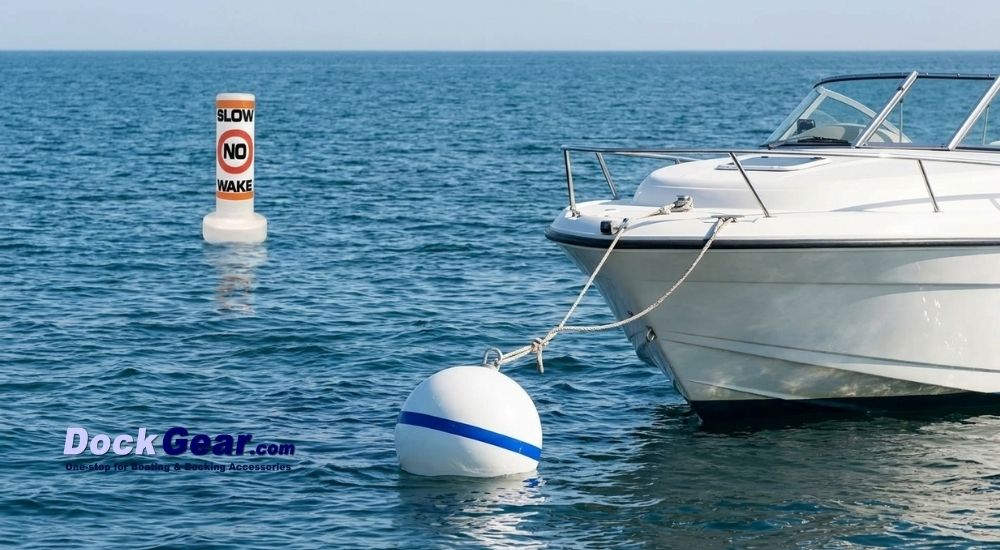
Visibility and clear water guidance matter just as much. Navigation lights are required from sunset to sunrise and in restricted visibility. Regulatory buoys can identify controlled areas, hazards, or boat-exclusion zones, while marker buoys can define a work area, swim perimeter, or other temporary boundary. A mooring buoy, white with a blue band, is intended for securing a vessel rather than serving as a general marker. Learn local markings before you leave, respect protected natural resources, and keep a deliberate eye on weather, traffic, and changing lake conditions. These boating basics are central to boating safety and help everyone stay safe, whether the day’s goal is to fish, cruise, or simply enjoy the water.
Prepare for every outing with accessible, properly fitted life jackets, throwable flotation, and required navigation lights. Understand the difference between regulatory, channel, marker, and mooring buoys, and follow their signals to avoid hazards and restricted areas. Federal rules are only a baseline, so check state and local requirements, licensing, permits, and waterway-specific guidance before operating or placing equipment.
Essential boating safety checklist
- Carry one Coast Guard-approved, properly sized wearable PFD for every person aboard.
- Keep life jackets readily accessible; children under 13 generally must wear them while underway.
- Bring a throwable Type IV device on boats 16 feet or longer, except canoes and kayaks.
- Test navigation lights before departure for nighttime travel or restricted-visibility conditions.
- Review local buoy meanings, hazard markers, controlled areas, and boat-exclusion zones before launching.
- Use mooring buoys only to secure vessels; do not treat them as general boundary markers.
- Monitor weather, water conditions, traffic, and passenger readiness throughout the trip.
Wear a Life Jacket, Life Rings and Rescue Readiness
Good boater safety begins before leaving the dock: make flotation easy to reach, make rescue equipment visible, and make sure everyone aboard knows what to do. The simplest rule is also the most useful, wear a life jacket rather than treating it as equipment for an emergency. A properly fitted, U.S. Coast Guard-approved life jacket must be the right size and in good, serviceable condition; wearable devices also need to be readily accessible, not sealed in a bag, locked away, or buried beneath gear.
Federal requirements set a practical baseline: recreational vessels need one wearable personal flotation device for each person aboard. Boats 16 feet and longer, with the exception of canoes and kayaks, also need a throwable Type IV device. Keep life rings or other throwable flotation where a crewmember can grab and deploy them immediately. For children under 13, federal law generally requires a Coast Guard-approved device while the boat is underway, subject to limited enclosed-cabin and below-deck exceptions
Safe boating also means setting expectations before conditions deteriorate. Explain where jackets are kept, who can assist a person in the water, and how to call for help. Older can take on a clear support role, checking fit, locating the throwable, and knowing not to rush a rescue without flotation, while the operator maintains control of the vessel. Use certified equipment, inspect it regularly, and replace damaged or poorly fitting gear. Rescue readiness is not an extra task; it is part of every departure.
Flotation and Rescue Readiness Checklist
| Item or requirement | What to have or do | When it applies |
|---|---|---|
| Wearable life jackets | Carry one properly fitted, U.S. Coast Guard-approved wearable personal flotation device for each person aboard. Keep devices in good condition and readily accessible. | Required on recreational vessels for every person aboard. |
| Wearing a life jacket | Wear a life jacket instead of treating it only as emergency equipment. | Before and while boating, especially when conditions may deteriorate. |
| Throwable Type IV device | Keep a throwable flotation device, such as a life ring, visible and ready for immediate deployment. | Required on boats 16 feet and longer, except canoes and kayaks. |
| Children under 13 | Have children wear a Coast Guard-approved life jacket. | Generally required while the boat is underway, subject to limited enclosed-cabin and below-deck exceptions. |
| Pre-departure rescue briefing | Explain where life jackets are kept, who can assist a person in the water, and how to call for help. | Before leaving the dock. |
| Rescue roles and equipment checks | Assign support roles, check life-jacket fit, locate the throwable device, inspect equipment regularly, and replace damaged or poorly fitting gear. | Before departure and during routine equipment checks. |
Essential flotation safety checks
- Wear a properly fitted, U.S. Coast Guard-approved life jacket whenever possible, rather than waiting for an emergency.
- Carry one serviceable wearable flotation device for every person aboard and keep each one immediately accessible.
- Keep a throwable Type IV device, such as a life ring, visible and ready to deploy on boats 16 feet or longer.
- Ensure children under 13 wear approved life jackets while underway, except where limited legal exceptions apply.
- Inspect jackets, rings, straps, buckles, and flotation material regularly; replace damaged, poorly fitting, or worn equipment.
- Before departure, show everyone where flotation equipment is stored and explain how to call for help.
- Assign rescue roles: maintain vessel control, deploy flotation first, and avoid entering the water without protection.
Boating Equipment for Marking, Mooring and Safe Boating
Safe boating depends on equipment that makes people, vessels and boundaries easier to identify on the water. Keep life rings and other flotation equipment accessible: every recreational vessel needs a wearable PFD for each person aboard, while boats 16 feet and longer, apart from canoes and kayaks, also need a throwable Type IV device. Local boat regulations and boating laws may add requirements beyond federal minimums, so confirm the rules wherever you operate.
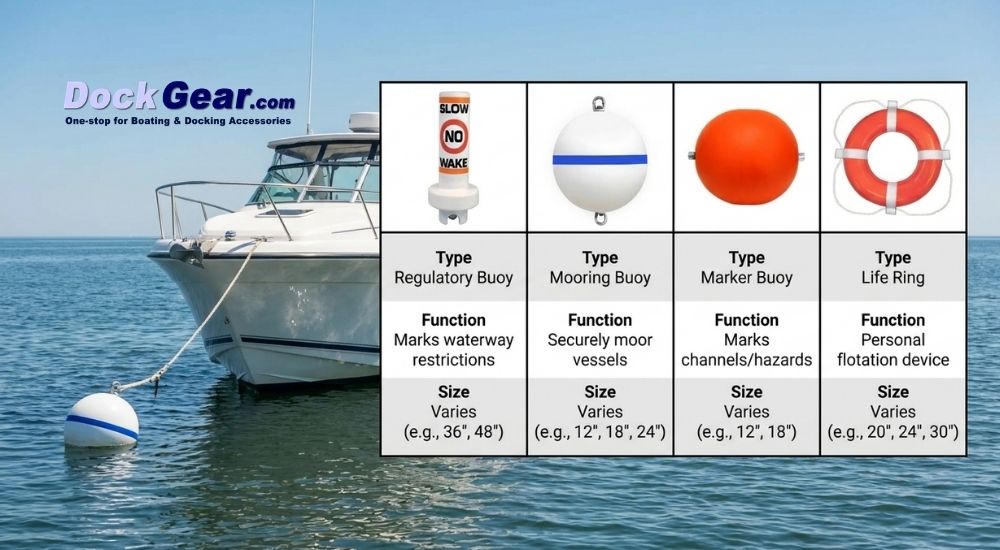
Choose marker buoys to define work areas, swim zones or temporary locations, and use purpose-built regulatory buoys where a condition, hazard or restricted area must be clearly communicated. Regulatory buoys use standardized symbols, including a crossed diamond for exclusion areas or hazards and a circle for controlled areas such as slow- or no-wake zones. Channel markers serve a different purpose: they identify safe water, hazards and a boat’s position relative to land. Their meaning should be understood before departure, not interpreted at speed.
For secure stops away from a dock, mooring buoys provide a designated connection point. In the U.S. system, a mooring buoy is white with a blue band and may carry a white reflector or light. Private aids to navigation should be selected and maintained with equal care. High-visibility color, reflective material and appropriate lighting improve recognition in changing conditions; navigation lights are required from sunset to sunrise and in restricted visibility.
Material quality matters over a full season. Look for dependable buoyancy, UV resistance, corrosion resistance and weather performance suited to the installation environment. The right marking and mooring equipment does more than organize the waterfront; it helps every operator make clearer, safer decisions.
Quick Reference: Common Boating Markers and Equipment
| Equipment or marker | Primary purpose | Key identification or use note |
|---|---|---|
| Wearable PFDs | Provide personal flotation for people aboard | Every recreational vessel needs one wearable PFD for each person aboard. |
| Throwable Type IV devices | Provide throwable flotation assistance | Required on boats 16 feet and longer, except canoes and kayaks. |
| Marker buoys | Define work areas, swim zones or temporary locations | Use where a location or area needs to be marked on the water. |
| Regulatory buoys | Communicate conditions, hazards or restricted areas | A crossed diamond indicates an exclusion area or hazard; a circle identifies controlled areas, such as slow- or no-wake zones. |
| Channel markers | Identify safe water, hazards and position relative to land | Understand their meaning before departure rather than interpreting them while underway. |
| Mooring buoys | Provide a designated connection point for secure stops away from a dock | In the U.S. system, they are white with a blue band and may have a white reflector or light. |
| Private aids to navigation | Support recognition and navigation in changing conditions | Select and maintain them carefully; high-visibility color, reflective material and appropriate lighting improve recognition. |
Waterway Rules, Operate Legally and Check License Requirements
Good buoy placement supports safe, orderly water use, but it does not replace the rules that govern a particular lake, river, harbor, or coastal passage. Operate legally by checking the federal baseline alongside the state and local requirements that apply where the vessel is registered and where it will be used; federal equipment rules are minimums, and additional state laws may apply. Confirm whether a boating license or boating education credential is required for the operator, and use approved courses when education is needed. These courses can provide practical education on local operating rules, safety requirements, and responsible buoy use. Your state boating department, parks authority, marina, or harbor office can clarify current rules, permits, and any installation requirements before a marker or mooring is set.
On the water, treat regulatory buoys as instructions, not suggestions. A crossed-diamond symbol identifies boat exclusion areas or hazards, while a circle denotes controlled areas such as slow- or no-wake zones. Give clear separation to restricted areas, swim areas, and dock approaches, and never use private marker buoys to imply authority over public water. Navigation aids also mark safe water and hidden dangers; in the U.S. lateral system, “Red, Right, Returning” remains the essential reference when returning from seaward.
Choose mooring buoys only for their intended purpose and follow the rules of the harbor or waterway. A recognized mooring buoy is white with a blue band and may carry a white reflector or light. In managed mooring fields, assignments, tackle specifications, permits, and inspections may be required. Keep required safety gear ready as well: every recreational vessel needs a wearable PFD for each person aboard, and boats 16 feet or longer generally need a throwable Type IV device.
References
- U.S. Coast Guard Boating Safety Division. A Boater's Guide to the Federal Requirements for Recreational Boats uscgboating.org
- U.S. Coast Guard Boating Safety Division. Life Jacket Wear / Wearing your Life Jacket uscgboating.org
- U.S. Coast Guard Navigation Center. U.S. AIDS TO NAVIGATION SYSTEM navcen.uscg.gov
- U.S. Coast Guard Navigation Center. Light List Annual Publication | Navigation Center navcen.uscg.gov